Articles

Featured Articles

  • Winning the OODA Loop: Processing High-Velocity Data in Contested Environments

    Winning the OODA Loop: Processing High-Velocity Data in Contested Environments

    In modern conflict, the advantage no longer belongs solely to the side with the most sensors or the largest data stores—it belongs to the side that can process, decide, and act faster than its adversary.

  • General Atomics Leverages AI Alongside Cloud-Based C2 in Latest Autonomous Aircraft Demonstration

    General Atomics Leverages AI Alongside Cloud-Based C2 in Latest Autonomous Aircraft Demonstration

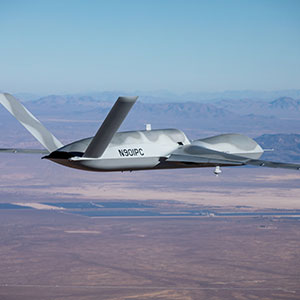
    General Atomics Integrated Intelligence, Inc. (GA-Intelligence) and General Atomics Aeronautical Systems, Inc. (GA-ASI) successfully completed a milestone demonstration on March 4th, validating the use of Agentic AI to enable autonomous tactical reasoning and decision making beyond line of sight (BLOS) in a sensor Emission Control (EMCON) environment.

  • Open Standards, Open Architecture, & Open Advantage: How GA-Intelligence Delivers Interoperability, Scalability, and Long-Term Mission Value

    Open Standards, Open Architecture, & Open Advantage: How GA-Intelligence Delivers Interoperability, Scalability, and Long-Term Mission Value

    In an era defined by information dominance, data interoperability and open architecture are core mission enablers. Across the defense, intelligence, and homeland security communities, the ability to integrate, correlate, and act on data from multiple domains is central to achieving decision superiority.

  • Can AI Solve Puzzles?

    Can AI Solve Puzzles?

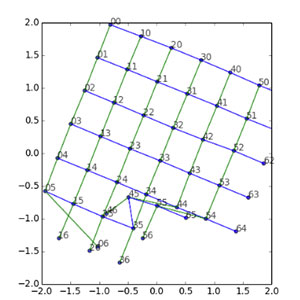
    At GA Intelligence, we're constantly exploring the boundaries of what modern AI and large language models (LLMs) can achieve. In this blog post, we'll explore the general mechanisms used by AI and LLMs and how they relate to solving games and puzzles.

  • The Critical Role of Access Controls and Formal Certification in Secure Information Systems

    The Critical Role of Access Controls and Formal Certification in Secure Information Systems

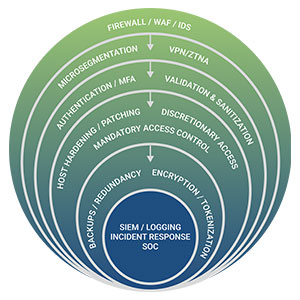
    In light of some recent developments and announcements regarding secure systems  needed to support our warfighting information technology requirements (or the lack thereof), we at GA Intelligence have some things we’d like to offer up for consideration and discussion. 

  • Latest GA Autonomous Jet Demo Features Live Air-to-Air Engagement Capability

    Latest GA Autonomous Jet Demo Features Live Air-to-Air Engagement Capability

    General Atomics Aeronautical Systems, Inc. (GA-ASI) and General Atomics Integrated Intelligence, Inc. (GA-Intelligence) successfully completed a groundbreaking demonstration on July 8, integrating technologies across multiple affiliates to showcase long-range kill chain effects, including an autonomous air-to-air engagement.

  • Leveraging Optix™ to Assess the Effects of Climate Change on Global Trade and the Panama Canal

    Leveraging Optix™ to Assess the Effects of Climate Change on Global Trade and the Panama Canal

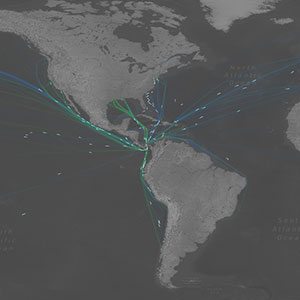
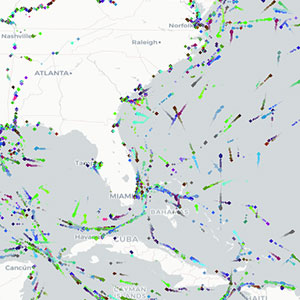
    The Panama Canal is a critical pathway for global trade which facilitates billions of U.S dollars’ worth of trade annually. Despite incurring greater transit fees than alternatives, such as the Suez Canal, the Panama Canal remains the preferred shipping route for Southeast Asian goods destined for the U.S. East Coast because it reduces cargo time in transit by an average of six days.

  • Let's Build a Deep Learning Activation Function

    Let's Build a Deep Learning Activation Function

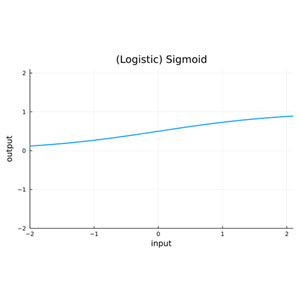
    Artificial Neural Networks (ANN) are universal function approximators with layers of feedforward computational nodes. ANNs are used in many Data Science applications involving classification and regression.

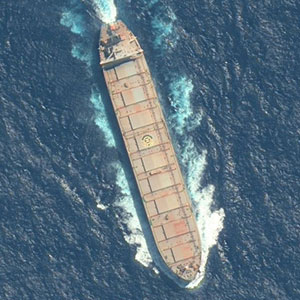
  • Monitoring and Imaging Vessels in Optix with Maxar Satellites

    Monitoring and Imaging Vessels in Optix with Maxar Satellites

    GA-Intelligence Optix platform provides easy access to low latency, high volume geospatial data and analytics at scale.

  • Understanding and Streaming Geospatial Vector Data using Apache Kafka and GeoMesa

    Understanding and Streaming Geospatial Vector Data using Apache Kafka and GeoMesa

    At GA-Intelligence our primary goal is to extract useful information from the data we process. We’re constantly striving to improve our data processing tools to enable powerful workflows and easier development.

  • Coarse Earth Change Detection: Supervised and Self-Supervised training

    Coarse Earth Change Detection: Supervised and Self-Supervised training

    Change detection from aerial or satellite images is in great demand for monitoring various activities. The detection of wide area change over the past year has garnered a lot of interest, with a wave of publications using different methodologies and different data sources to solve the task [1,2].

  • RF Fingerprinting with a SDR

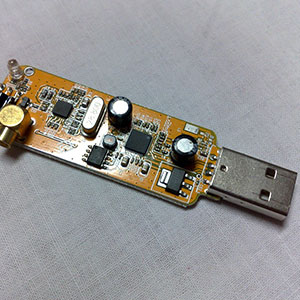
    RF Fingerprinting with a SDR

    The increase in Radio Frequency (RF) devices driven by the Internet of Things (IoT) has led to a need to efficiently and reliably authenticate these identifiers, especially since traditional authentication methods are easily compromised through identity spoofing.

  • EWI Space : Project Chipsee

    EWI Space : Project Chipsee

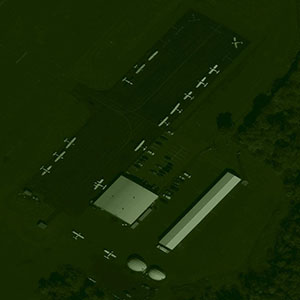
    Image classification is used on overhead imagery to detect specific objects such as planes, cars and buildings. 

  • Improving Ensemble Robustness via Synthetic Latent Discriminative Representation (SLDR) Networks

    Improving Ensemble Robustness via Synthetic Latent Discriminative Representation (SLDR) Networks

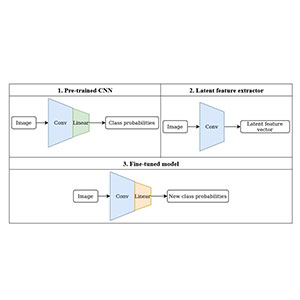
    Algorithms for effective automated target recognition (ATR) at scale must be able to process large imagery datasets in a timely manner, while minimizing human effort in terms of annotating images and reviewing model predictions. Convolutional neural networks (CNNs) excel at many computer vision tasks, but can have a high rate of false positives under certain conditions. 

  • Outliers and Categorical Data

    Outliers and Categorical Data

    a machine learning library comparable to scikit-learn. This library uses enumerated encoding to store categorical variables. With enumerated encoding, each variable is mapped to an integer in one singular new feature. 

  • Analyzing and Enhancing Vessel Schedule Data

    Analyzing and Enhancing Vessel Schedule Data

    With the global pandemic disrupting supply chains everywhere, we at GA-Intelligence were interested to investigate the reliability of shipping schedules. To do this, we partnered with global carrier aggregator Linescape.

  • Detecting Anomalous Vessels at Maritime Ports

    Detecting Anomalous Vessels at Maritime Ports

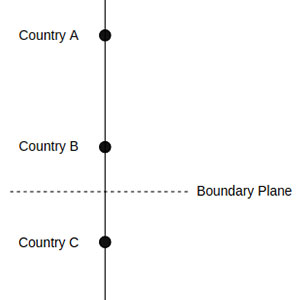
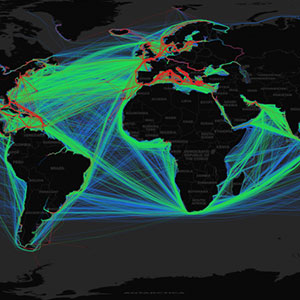
    Every day, hundreds of thousands of vessels cross the oceans, traveling from country to country and port to port. Most of these trips are mundane, routine, and fairly uninteresting. These vessels are carrying cargo and have declared their port calls beforehand.

  • Bootstrapping a Better Model

    Bootstrapping a Better Model

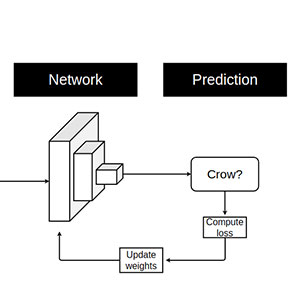
    Modern computer vision models often do a fantastic job of identifying the contents of an image, but they can also make mistakes, confusing one type of object with another. These mistakes sometimes make human-interpretable sense, but other times the reason for the mistake is less than obvious.

  • How Can SAR Imagery Improve on Optical Overhead Imagery?

    How Can SAR Imagery Improve on Optical Overhead Imagery?

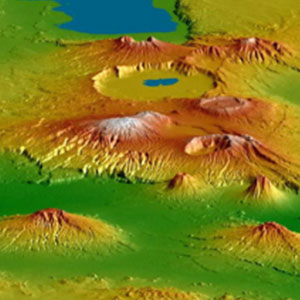
    Overhead imagery is widely used in a variety of applications, from monitoring natural disasters to visualizing directions on a map. For example, Google Earth uses overhead satellite imagery covering nearly the entire Earth’s surface.

  • Patent Granted to Dr. Michelle Hamilton’s Emergency Response Software System

    Patent Granted to Dr. Michelle Hamilton’s Emergency Response Software System

    A recent article on the U.S. Army Corps of Engineers ERDC (Engineer Research and Development Center) website described how a patent was granted in September 2020 to  a system invented by  GA-Intelligence Michelle Hamilton for Multi-Criteria Decision Analysis.

  • Clustering Ship Data to Identify Port Boundaries

    Clustering Ship Data to Identify Port Boundaries

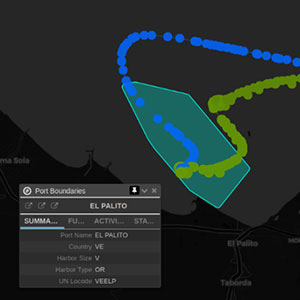
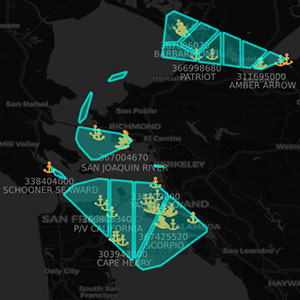
    There are many reasons that researchers analyze maritime traffic. For example, commodity traders analyze the flow of goods, port operators coordinate ground transportation and minimize vessel time in port, and government agencies track economic statistics.

  • GeoMesa 3.1: A Minor Release with Major Improvements

    GeoMesa 3.1: A Minor Release with Major Improvements

    The GeoMesa team has released LocationTech GeoMesa 3.1.0. This minor release adds new exciting features and upgrading from GeoMesa 3.0.0 should be easy. 

  • Anonymous Data? How Anonymous?

    Anonymous Data? How Anonymous?

    According to GA-IntelligenceEthical Principles, individual privacy is a right. When statistical microdata (data about individuals) is released to the public or other non-trusted parties, it must go through a process of anonymization to protect the privacy of the individuals represented. 

  • GeoMesa 3.0: Cheaper, Faster, Better

    GeoMesa 3.0: Cheaper, Faster, Better

    Technology follows a common story arc. First, technology is created that makes it possible to do something that was previously impossible. Next, incremental improvements to that technology improve the performance of that task in a number of ways.

  • Better Visualizations with GA-Intelligence New Plotting Library

    Better Visualizations with GA-Intelligence New Plotting Library

    Part of being a successful data scientist is the ability to to clearly visualize your data and results in an easily interpretable way. This is not always a simple task.

  • GA-Intelligence Shares Our Statement of Ethical Principles

    GA-Intelligence Shares Our Statement of Ethical Principles

    GA-Intelligence helps our customers make big decisions, often within a large and complex ethical context. We have recently published our Statement of Ethical Principles, which provides a framework for thinking through ethical problems as part of our design and development.

  • Can a Neural Net Learn the Quadratic Formula?

    Can a Neural Net Learn the Quadratic Formula?

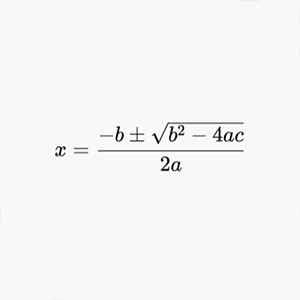
    At first glance, this problem seems trivial. Neural nets are sophisticated technical constructs capable of advanced feats of machine learning, and you learned the quadratic formula in middle school. But an interesting property of classifiers was revealed trying to solve this issue.

  • GA-Intelligence Charlottesville Hackathon

    GA-Intelligence Charlottesville Hackathon

    We recently celebrated the 30th anniversary of the founding of GA-Intelligence, and to celebrate that occasion and give back to our local community, we sponsored an internal hackathon for our staff one recent afternoon. 

  • Seeing with Deep Learning: Advances and Risks

    Seeing with Deep Learning: Advances and Risks

    Self-driving vehicles can read road signs and identify pedestrians. State-of-the-art diagnostic tools can evaluate MRI and CT scans to detect illnesses. Your smartphone can search through your photos and pick out all of the ones with cats. 

  • c-biz Magazine features GA-Intelligence Employee Wellness Programs

    c-biz Magazine features GA-Intelligence Employee Wellness Programs

    The winter 2019-2020 issue of c-biz magazine features a cover story titled “Workplace Wellness” that described employee wellness options at several forward-thinking Charlottesville area employers.

  • Building Shipping Indicators with GA-Intelligence’s Optix Platform

    Building Shipping Indicators with GA-Intelligence’s Optix Platform

    We are always excited to see customers using our technology to advance the common good. The Big Data UN Global Working Group is leveraging CCRi’s Optix platform to deploy a multidomain analytics platform with the goal of generating national statistics.

  • Rooting Out Routes

    Rooting Out Routes

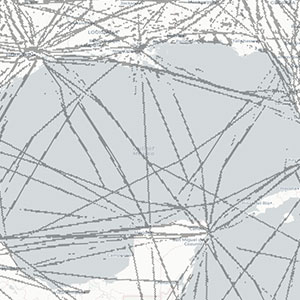
    Rather than simply flying straight from point A to point B, commercial airline flights fly along preset routes. Pilots often liken these routes to “highways in the sky.” However, unlike highways on the ground, exact maps of these routes are hard to come by.

  • Breaking Down the Icon

    Breaking Down the Icon

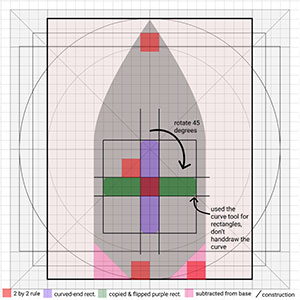
    One benefit of working at GA-Intelligence is the opportunity to stretch outside of our comfort zone. We consider developers to be innovators and solution engineers who can tackle any problem presented with the skillset we are continually building.

  • Don’t Miss Your Turn: Calculating Aircraft Turn Locations from Trajectory Data

    Don’t Miss Your Turn: Calculating Aircraft Turn Locations from Trajectory Data

    With the increasing availability of network connected GPS devices, aircraft trajectory data is now quite common. Mining trajectory data for patterns presents a number of unique challenges:

  • Odds and Ends

    Odds and Ends

    It’s been a busy winter here at GA-Intelligence with expansion of all types going on. We are growing with new and expanded projects, our operations practices are getting fine-tuned, and we continue to grow physically here at our Sachem Village headquarters, constructing additional space in our newest building.

  • Using Attribute Values to Tune Vector-Based Entity Representations

    Using Attribute Values to Tune Vector-Based Entity Representations

    Representing entities by their attributes, like just about any database does, makes it easy to manipulate information about these entities using their attribute values—for example, to list all the employees who have “Shipping” as their “Department” value. 

  • No Flo, We Won’t Go

    No Flo, We Won’t Go

    Summer finally wound down and crept very slowly into fall. And, boy, so far it’s been a wet one! The majority of days in September experienced everything from mild mist to heavy downfalls as one storm system after another moved through our area.

  • Steering Ships Around Hurricane Florence

    Steering Ships Around Hurricane Florence

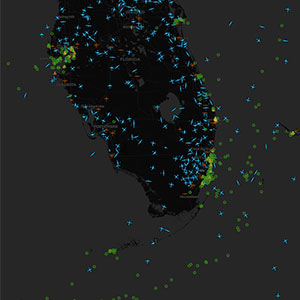
    The image below loops an animation of Optix.Earth’s rendition of ship traffic around the southeastern United States from Tuesday to Thursday of last week. It shows that all the ships are avoiding an area about 800 miles wide that was moving towards the North and South Carolina coast: Hurricane Florence.

  • You Don’t Look a Day Over 29…

    You Don’t Look a Day Over 29…

    This past June GA-Intelligence celebrated a big birthday of turning 29 years old! We’ve done a lot of growing up since the company started out as a little three person start-up out of UVA, and arriving at our current location in Sachem Village by the year 2000.

  • Data fusion for sociocultural place understanding using deep learning

    Data fusion for sociocultural place understanding using deep learning

    The International Society for Optical Engineering, or SPIE (formerly known as the  Society of Photographic Instrumentation Engineers), has published a range of peer-reviewed scientific journals for over 50 years. 

  • How to use TransE effectively

    How to use TransE effectively

    TransE, or Translating Embeddings for Modeling Multi-relational Data, lets us embed the contents of a knowledge graph by assigning vectors to nodes and edge types (a.k.a. predicates) and, for each subject-predicate-object triple, minimizing the distance between the object vector and the translation of the subject vector along the predicate vector. 

  • Ridin’ High

    Ridin’ High

    What’s the first thing that comes to your mind when you think of the month of May? Flowers? Parades? Well, if you’re an avid cyclist (and have Frank D in your employ) then the correct answer is The National Bike Challenge! CCRi cyclists participate in this event each year with great enthusiasm and good-natured competitiveness.

  • Z Earth, it is round?!

    Z Earth, it is round?!

    GeoMesa, like many other data stores that index geographic data, uses space-filling curves to impose an order on two-dimensional geometries. It’s easy to know that “Virginia” as a string data type follows “Illinois” when sorted alphabetically, but it’s much less obvious whether the multi-polygon that is Virginia’s border should come before or after Illinois’ state boundary in an index.

  • GeoMesa 2.0 Released

    GeoMesa 2.0 Released

    The GeoMesa project has just published our official 2.0.0 release. This is a quick highlight of some of the new features. For a full list of the improvements and fixes, take a look at the release notes.

  • Spring Flings & Artistic Things

    Spring Flings & Artistic Things

    Ah, late winter and love is in the air! Or maybe it’s just the early start to pollen season…? Valentine’s Day reared its ugly/awkward head so naturally a special symposium was in order—Valsposium! The usual snacks were in play, along with other appropriately theme treats.

  • Calculating Geospatial Socioeconomic Indicators for Healthcare with US Census Data

    Calculating Geospatial Socioeconomic Indicators for Healthcare with US Census Data

    A number of healthcare metrics, including readmission rates and chronic disease burden, have been linked to socioeconomic indexes in various studies. In the United States, many of these indexes can be calculated from freely available US Census Bureau data. Generally, the index is a simple function of one or more census variables. 

  • Interactive Insights into Hurricane Harvey’s Impact on Energy Production with GeoMesa & Zeppelin Notebooks

    Interactive Insights into Hurricane Harvey’s Impact on Energy Production with GeoMesa & Zeppelin Notebooks

    In the current Big Data environment, it’s crucial to have a quick iteration cycle for exploring data, performing analytics, and visualizing the result. For example, the impact of Hurricane Harvey on oil and gas shipping in the Gulf of Mexico last fall has many dimensions to explore...

  • Deep Learning and Ontology Development

    Deep Learning and Ontology Development

    Ontologies are widely used for representing and reasoning about semantic content in a structured way. However, manual ontology construction is a subtle and time-consuming process that often yields mixed results. Hand-crafted ontologies tend to be inflexible and inordinately complex, which limits their usefulness and makes cross-domain alignment painfully difficult. 

  • Say Cheeeeese!

    Say Cheeeeese!

    Active imaginations and a love of fun are always in play at GA-Intelligence . Leave it to Andrew H. to come up with an idea so brilliant it left us shaking our heads thinking, “Why didn’t we think of this before?”

  • GeoMesa and “The Farm Fantastic”

    GeoMesa and “The Farm Fantastic”

    One of the most interesting areas where we’ve seen usage of GA-Intelligence open source spatio-temporal database GeoMesa has been in precision agriculture. 

  • Sauerkraut and Brussel Sprouts!

    Sauerkraut and Brussel Sprouts!

    Oh, what an activity-filled summer and fall we’ve had here at GA-Intelligence! Count on us to have fun in a variety of different ways. We’ve had dinners and drinks downtown, we’ve sampled a new brewery, and seen a total eclipse of the sun. 

  • GA-Intelligence at becamp

    GA-Intelligence at becamp

    or several years now, various GA-Intelligence employees have attended Charlottesville’s pop-up tech conference becamp, and this year we took the additional step of becoming a sponsor

  • Deep Reinforcement Learning–of how to win at Battleship

    Deep Reinforcement Learning–of how to win at Battleship

    According to the Wikipedia page for the game Battleship, the Milton Bradley board game has been around since 1967, but it has roots in games dating back to the early 20th century.

  • Mixed Bag

    Mixed Bag

    GA-Intelligence annual spring brewfest once again put beer tasters in the difficult quandary of trying to rank favorites from the plethora of home-brewed goodness. While the kids played in large, muddy ponds from recent rains, the brew tasters thoughtfully sampled, and then sampled again. 

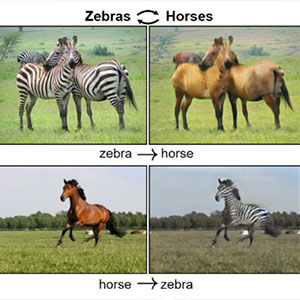
  • Generating images and more with Generative Adversarial Networks

    Generating images and more with Generative Adversarial Networks

    A great deal of machine learning progress in recent years has been based on the training of neural networks using supervised learning. 

  • Deep Learning with PyTorch in a Jupyter notebook

    Deep Learning with PyTorch in a Jupyter notebook

    Last summer, our blog post “GeoMesa analytics in a Jupyter notebook“ described how Jupyter Notebook allows interactive exploration of data using programming languages that are rarely used interactively. It also showed how a series of steps can be saved in a reusable notebook for others to learn from.

  • Trivial Matters

    Trivial Matters

    Sometimes you just need to take a break and enjoy the little things in life. Good coffee. Good beer. Good food with friendly co-workers. Better yet, Good food, good beer, and some tough trivia.

  • GA-Intelligence conference speaking stars

    GA-Intelligence conference speaking stars

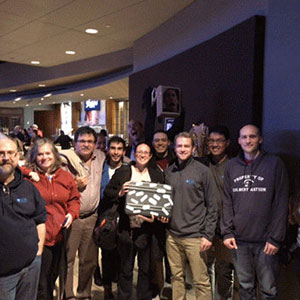
    Here at GA-Intelligence, we’re working on such an interesting set of technologies that we could probably find a conference to speak at every week if we wanted to. Two especially nice conferences that recently included CCRi speakers were the Google Cloud Next ‘17 conference and Charlottesville’s Tom Tom Festival Machine Learning conference.

  • New in GeoMesa: Spark SQL, Zeppelin Notebooks support, and more

    New in GeoMesa: Spark SQL, Zeppelin Notebooks support, and more

    Release 1.3 of GeoMesa has taken some great steps in making GeoMesa an even better analytics platform for Big Spatial Data. Many improvements fall into two categories: support for a wider range of Spark features and improved support for interactive notebooks such as Jupyter and Zeppelin.

  • Training a video annotation system with Grand Theft Auto

    Training a video annotation system with Grand Theft Auto

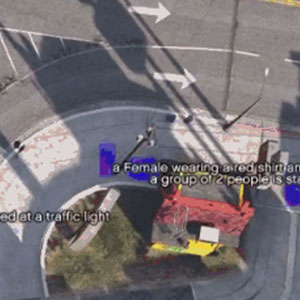
    One of the more interesting research projects underway at GA-Intelligence uses machine learning to automatically generate text descriptions of action happening in videos, complete with a color-coded playback slider showing where in the video the action takes place.

  • GeoHipster interview with Boundless CTO Andrew Dearing

    GeoHipster interview with Boundless CTO Andrew Dearing

    As described on their About page, “GeoHipster is a collaborative independent online publication on geotechnology and culture, with special focus on open source and open data.” It’s a great way to stay in touch with interesting new things in the geospatial world.

  • Using Orion to view graphs with thousands of nodes

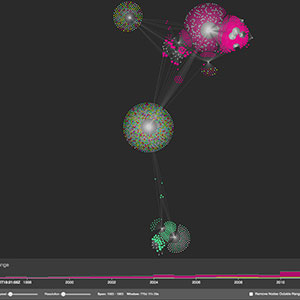
    Using Orion to view graphs with thousands of nodes

    It’s a cliché that a picture is worth a thousand words, but what if you want to create a picture of two thousand nodes connected to each other with several fields of information attached to each node? 

  • Torch vs TensorFlow vs Theano

    Torch vs TensorFlow vs Theano

    For an ongoing project at GA-Intelligence, we wanted to determine whether remaining with Torch (used for Phase I of a project currently underway at GA-I3 running on GPUs) or switching to TensorFlow or Theano made the most sense for Phase II of the project. 

  • Explainable Artificial Intelligence (XAI)

    Explainable Artificial Intelligence (XAI)

    An article in last month’s Wired magazine titled “The A.I. Enigma: Let’s Shine a Light into the Black Box” (not available online) described how the inscrutable nature of many artificial intelligence algorithms has frustrated people who want to know why a system made a particular recommendation.

  • The Fruits & Festivities of Early Fall

    The Fruits & Festivities of Early Fall

    As the final muggy days of summer rolled to a close, a kind of frenzy broke out among some denizens of GA-Intelligence. A frenzy that could only be quenched by crispy green vegetables or exotic local fruits.

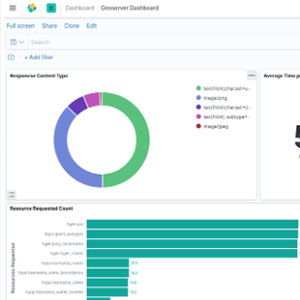
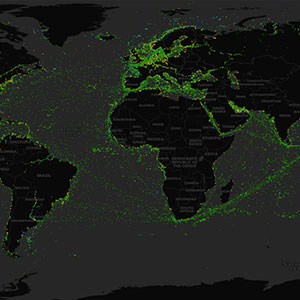
  • Visualizing huge volumes of AIS data in a web-based map using GeoMesa and GeoServer

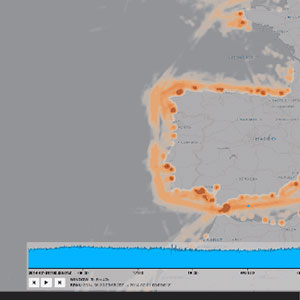
    Visualizing huge volumes of AIS data in a web-based map using GeoMesa and GeoServer

    When starting a new data science project, one should typically first understand the problem domain, state a hypothesis, and then gather data to prove or disprove said hypothesis. But, if I’m being honest, I usually start with a new data set and ask “What kinds of problems can I solve with all this new data?!” I can’t help myself—a new data set is too intriguing to resist diving into. 

  • Summer Days, Summer Nights

    Summer Days, Summer Nights

    It’s been another busy summer for GA-Intelligence. We expanded our teams into two new buildings: one small office building and into a larger office building, all within easy walking distance, within the same office park, for a total of four buildings.

  • New GeoMesa tutorial: Aggregating and Visualizing Data

    New GeoMesa tutorial: Aggregating and Visualizing Data

    Earlier this summer, the GA-Intelligence blog entry GeoMesa analytics in a Jupyter notebook introduced the use of Jupyter notebooks with Scala and GeoMesa to do Apache Spark analytics and geospatial visualization. As the blog entry said, it only scratched the surface of the kinds of geospatial analytics that you can do with GeoMesa and Spark.

  • What have our 2016 summer interns been up to?

    What have our 2016 summer interns been up to?

    We asked each of our interns to describe what they’ve been working on and how they were enjoying their life in the working world. This year, all the interns came from the University of Virginia School of Engineering and Applied Science, where all are Computer Science majors except for Ryan, who is majoring in Biomedical Engineering and Physics.

  • GeoMesa analytics in a Jupyter notebook

    GeoMesa analytics in a Jupyter notebook

    As described on its home page, “The Jupyter Notebook is a web application that allows you to create and share documents that contain live code, equations, visualizations and explanatory text. Uses include: data cleaning and transformation, numerical simulation, statistical modeling, machine learning and much more.”

  • GA-Intelligence 2016 Spring Brewfest

    GA-Intelligence 2016 Spring Brewfest

    Over the past couple of years GA-Intelligence has experienced incredible growth. So much so that our employee population has more than doubled. Add family and SO’s, and you have the makings for quite a big turn out under our trusty Shelter #2 in McIntire Park. And after weeks of daily rain fall, Mother Nature cut us some slack and came through with sunny skies and gloriously perfect temperatures.

  • GeoMesa’s Cassandra support

    GeoMesa’s Cassandra support

    One great new feature of GeoMesa 1.2 is its prototype support for Apache Cassandra. This open-source key-value NoSQL database was originally developed at Facebook to let users search their inboxes more efficiently than the MySQL database that Facebook had been using.

  • GA-Intelligence After Hours

    GA-Intelligence After Hours

    When not at work, GA-Intelligence employees are actively at play. Many engage in competitive or recreational athletic pursuits like tennis, cycling, soccer or Ultimate Frisbee. Those with children are often on the sidelines, encouraging their kids at the soccer field or swim meet. 

  • Using Kafka with GeoMesa to visualize streaming data

    Using Kafka with GeoMesa to visualize streaming data

    Well-known GeoMesa use cases often center around its ability to work with large, scalable column-oriented database managers such as Accumulo, HBase, and Google Cloud Bigtable.

  • GeoMesa 1.2: Now with Eclipse LocationTech Vetting!

    GeoMesa 1.2: Now with Eclipse LocationTech Vetting!

    Release 1.2 of GeoMesa, our open source suite of geospatial analytics tools designed to run with Hadoop-scale volumes of data, is now out. 

  • Bikes Mean Business

    Bikes Mean Business

    Albemarle County’s GA-Intelligence named a Bronze Level Bicycle Friendly BusinessSM by the League of American Bicyclists

  • 2015 GA-Intelligence Oktoberfest

    2015 GA-Intelligence Oktoberfest

    Sunny skies and perfect fall weather were the backdrop for GA-Intelligence Oktoberfest in McIntire Park. And while there was the usual grilling, great potluck, games and camaraderie, there was also a palpable feel of competition in the air. 

  • GA-Intelligence Outsize Performance in the National Bike Challenge

    GA-Intelligence Outsize Performance in the National Bike Challenge

    Sometime at the beginning of this summer, Frank Deviney told me about the National Bike Challenge, but his words fell upon deaf ears. Frank had been logging his miles for many weeks by mid August with his e-bike (which is allowed by the challenge) when I decided I could use the motivation to cycle and decided to register.

  • Cloud Computing With Spark: Using All Your executors

    Cloud Computing With Spark: Using All Your executors

    Sometimes Data Scientists find themselves with a map-reduce cloud architecture and computation that needs to be done on a large scale, but the data isn’t actually cloud scale.

  • Get to the Point with Big Spatial Data

    Get to the Point with Big Spatial Data

    In my previous post, I laid out a case for the significance of Big Spatial Data and my surprise that so little is published about it. Now I’ll formally introduce the GeoMesa Project, which seeks to address the challenges faced by developers buried in data with no way to use it.

  • Big Spatial Data – Your day has come

    Big Spatial Data – Your day has come

    Despite all the buzz that surrounds the term “big data,” we hear surprisingly little about “big spatial data.” Of the top ten results from an Incognito Google search for “Big Spatial Data,” only two results are from 2015 and only one – “GIS Tools for Hadoop by ESRI” – attempts to present a solution.

  • Ketos: neural networks for document retrieval

    Ketos: neural networks for document retrieval

    Modeling language with neural networks is a highly active and rapidly maturing field. Language agnostic models can now be efficiently trained on raw text containing billions of words, and they achieve state of the art performance on many natural language processing tasks such as tagging parts of speech, semantic role labeling, and sentiment analysis.

  • GA-Intelligence Offers GeoMesa for Geospatial Analysis on Google’s Newest Platform: Cloud Bigtable

    GA-Intelligence Offers GeoMesa for Geospatial Analysis on Google’s Newest Platform: Cloud Bigtable

    GA-Intelligence in collaboration with Google, Inc., has announced the initial release of GeoMesa for Google Cloud Bigtable. GeoMesa is an open-source system that quickly stores, indexes, and queries hundreds of billions of geospatial features in a distributed (i.e. cloud) database.

  • Life and People at GA-Intelligence

    Life and People at GA-Intelligence

    Spring is in the air, and once again it’s time for our semi-annual Brew Fest and Picnic in McIntire Park. But wait! The clouds are darkening, and the threat of rain looms large. No matter. GA-Intelligence employees are quick to adapt to change when needed. 

  • Partially Applied Functions in R, Scala, and Javascript

    Partially Applied Functions in R, Scala, and Javascript

    Partial function application is the process of fixing a number of arguments to a function. This is an interesting and useful feature in functional programming languages such as Scala, R, and Javascript.

  • Crossmodal Semantic Representations

    Crossmodal Semantic Representations

    Recently at GA-Intelligence, we have been doing a lot of research in the area of reduced dimensional semantic embedding models: models where semantically similar objects possess similar representations. 

  • Calculating Feature Importance in Data Streams with Concept Drift using Online Random Forest

    Calculating Feature Importance in Data Streams with Concept Drift using Online Random Forest

    I had the privilege of presenting my work on “Calculating Feature Importance in Data Streams with Concept Drift using Online Random Forest” at IEEE Big 2014 in Washington, DC this last week. 

  • GA-Intelligence Oktoberfest

    GA-Intelligence Oktoberfest

    Grey skies and persistent drizzle did nothing to deter the GA-Intelligence faithful from participating in their traditional Ocktoberfest in McIntire Park.

  • Learning with Rule Ensembles

    Learning with Rule Ensembles

    At GA-Intelligence we are interested in all kinds of learning algorithms, from generalized linear models to random forests. One of the models that we have recently been working on is called a rule ensemble and aims to provide deeper insight into how a model produces a prediction while still maintaining predictive accuracy.

  • What Have Our GA-Intelligence Summer Interns Been Up To?

    What Have Our GA-Intelligence Summer Interns Been Up To?

    This blog was written by each intern, sharing what they did this summer as well as interesting parts of their GA-Intelligence internship experience.  As you can see, our software engineering interns really dove into the code and had a productive summer!

  • Concept Extraction, Definition, and Visualization from Large RDF

    Concept Extraction, Definition, and Visualization from Large RDF

    Learning from relational data, in which entities can be connected to each other with varying types of relations (friendOf, worksFor, …), frustrates many machine learning algorithms which expect tabular data. How do you represent all the friends of an individual in a table? 

  • GA-Intelligence Employee Alec Gosse Uses Big Data to Seek Insights to Bicycle Travel Flow

    GA-Intelligence Employee Alec Gosse Uses Big Data to Seek Insights to Bicycle Travel Flow

    As a longtime bicyclist, Alec Gosse is concerned with bike safety and the desire to make bicycle travel practical in a society centered on automobile travel.

  • Distributed Relational Learning

    Distributed Relational Learning

    Learning from relational data, in which entities can be connected to each other with varying types of relations (friendOf, worksFor, …), frustrates many machine learning algorithms which expect tabular data. How do you represent all the friends of an individual in a table?

  • GA-Intelligence Semi-Annual Brewfest

    GA-Intelligence Semi-Annual Brewfest

    GA-Intelligence is not only a fun place to work, it’s also a great place to have fun. One of the perks is enjoying the fermented treats of our creative brewers. Hunter Provyn brought in a keg of his own “Childe of Stingo,” the offspring of the classic English strong ale, brewed with oak chips and partially soured. 

  • GeoMesa: Scaling up Geospatial Analysis

    GeoMesa: Scaling up Geospatial Analysis

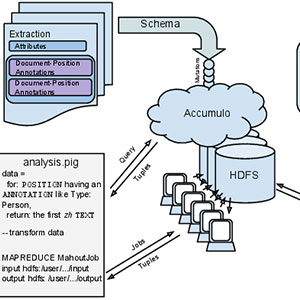
    GeoMesa is an open-source, LocationTech project that manages big geo-time data within the Accumulo key-value data store so that those data can be indexed and queried at scale effectively. 

  • Which Armstrong?

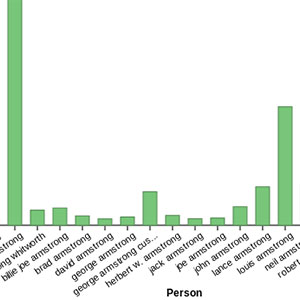
    Which Armstrong?

  • Going beyond tabulating comentions

    Going beyond tabulating comentions

    In this and my next post, I’ll be showing a a few quick analyses we performed using a new tool we developed, called Elias. In today’s post, we’ll see how topic modeling can be used to characterize how entities are co-mentioned, not just how often.

  • Data Science Meetup

    Data Science Meetup

    GA-Intelligence was delighted to host the second meeting of the Cville Data Science group earlier this month. A full house packed our conference room, and a good time was had by all.

  • Typeclasses for Flexible API Development

    Typeclasses for Flexible API Development

    Here at GA-Intelligence, we do a lot of machine learning; going from data to knowledge is kind of our thing. We’ve got a library of machine learning tools in-house, and we even use other algorithms from third-party developers sometimes.

  • Accumulating Responses from Child Actors and Transitive Message Ordering

    Accumulating Responses from Child Actors and Transitive Message Ordering

    When using actors, sometimes a parent actor needs to aggregate a result from a list of child actors. And if the parent doesn’t want to wait around forever for the children to get their responses together, it might hand off the responsibility to a temporary actor. 

  • Composing Big Data Maps With GeoMesa and Geoserver

    Composing Big Data Maps With GeoMesa and Geoserver

    When building web based data visualization applications, you usually want to defer rendering and styling to as late as possible in the request lifecycle. This gives your users the most flexibility when composing and customizing intelligent visualizations of data. 

  • Boundless and GA-Intelligence Launch OpenGeo Suite with GeoMesa

    Boundless and GA-Intelligence Launch OpenGeo Suite with GeoMesa

    Alexandria, VA October 27, 2013 — Boundless and GA-Intelligence announce the launch of a new platform for building geospatial capabilities on the highly distributed Apache Accumulo database. OpenGeo Suite with GeoMesa combines data management and publishing with big data analytics via GeoMesa, a high performance spatio-temporal indexing and querying capability for Accumulo. 

  • Using Scala traits to avoid delegation

    Using Scala traits to avoid delegation

    Scala lets us write short and expressive code, and today we’re going to look at one of the ways we’ve leveraged that ability in the GeoMesa codebase.

  • Spatio-temporal Indexing in Non-relational Distributed Databases

    Spatio-temporal Indexing in Non-relational Distributed Databases

    Big Data has driven the need for datastores that can scale horizontally leading to the development of many different NoSQL database implementations, each with different persistence and query philosophies. 

  • Stochastic Gradient Descent

    Stochastic Gradient Descent

  • Destructuring in Mathematica

    Destructuring in Mathematica

  • Latent Semantic Analysis in Solr using Clojure

    Latent Semantic Analysis in Solr using Clojure

  • PostGIS BBOX Query Gotcha

    PostGIS BBOX Query Gotcha

  • Incanter and the GLM

    Incanter and the GLM

  • Monte Carlo Pi calc

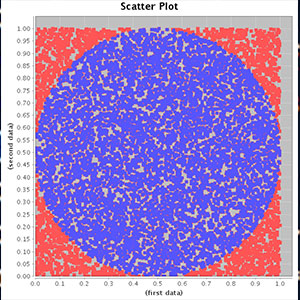
    Monte Carlo Pi calc

  • Functional programming and root finding

    Functional programming and root finding

  • Python Static Dictionaries in Nearest Neighbor Queries

    Python Static Dictionaries in Nearest Neighbor Queries

  • Median Age as Predictor Variable

    Median Age as Predictor Variable

  • Converting Lat/Lon to Zip Code

    Converting Lat/Lon to Zip Code

  • Second Pass at Analytics X Prize

    Second Pass at Analytics X Prize

  • Evaluating Spatial Predictions

    Evaluating Spatial Predictions

  • Analytics X Prize

    Analytics X Prize